
Contact us
With a training workstation developed in-house and a digital learning platform, MiniTec is breaking new ground in vocational training. The concept combines traditional hands-on training with modern digital learning methods – practical, sustainable, and flexible.
Digitalization is transforming the industry—and with it, the requirements for vocational training. At MiniTec, this transformation is already taking place in the training workshop. A unique training workstation has recently been installed there: a hexagonal workbench where six trainees can work simultaneously. Each workstation is equipped with a swiveling tablet holder.
In the future, the tablet will completely replace folders, worksheets, and training materials. “Every apprentice receives their own tablet in their first year of training. The training program then runs entirely digitally—without any paper at all,” explains training manager Simon Lorenz.
The new workbench is far more than just a functional training workstation—it is also the result of an extraordinary success story. It was developed by Patrick Gorges, who completed his apprenticeship as a mechatronics technician at MiniTec and subsequently earned his certification as a state-certified mechatronics technician. As part of his thesis, he was tasked with designing a future-proof training workstation for the MiniTec training workshop.
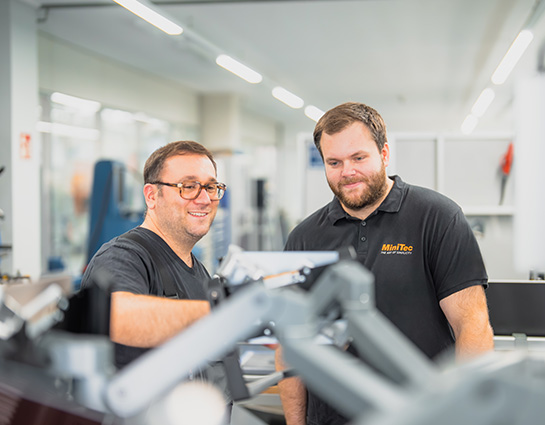
Simon Lorenz and Patrick Gorges are convinced of the benefits of the new desk in combination with the digital learning platform.
Patrick Gorges placed special emphasis on healthy working conditions. While the workbench’s height complies with current training standards, the vise clamps can be individually adjusted to accommodate different body heights. The tablets are also positioned ergonomically: They are mounted on height-adjustable swivel arms and can thus be positioned directly in front of the trainees without them having to lean forward to work or read. “It was important to me that the workplace adapt to the person as much as possible—and not the other way around,” says Patrick Gorges, describing the basic concept behind his design.
The 5S principle established in the training workshop was also consistently incorporated into the design. All tools have a clearly defined place; drawers are equipped with custom-fit inserts; and all storage locations are clearly labeled. Smooth surfaces and largely closed profile grooves facilitate cleaning and prevent the creation of unnecessary surfaces for placing items. In this way, the training bench not only promotes order and cleanliness but also teaches trainees structured workflows and efficient processes from the very beginning.
Built using the MiniTec profile system, this workbench is exceptionally sturdy and can be expanded at any time. High-quality drawer cabinets, professional vices, and an extremely durable PU worktop make it ideally suited for daily use in educational settings. The worktop is cut-resistant and resistant to hammer blows, oils, and other chemicals – and is therefore designed for a long service life.
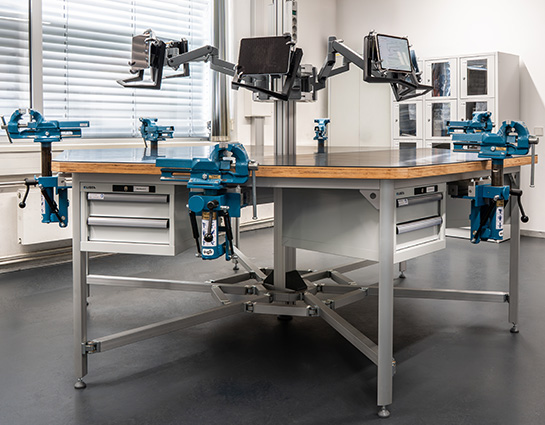
The workbench has room for six apprentices.
The heart of the concept, however, lies on the tablet. There, the trainees access a digital learning platform that MiniTec has built entirely with its own content. “I’ve tailored the content precisely to our machines, our workstations, and our processes. This isn’t general theory—it’s exactly the kind of training that actually takes place at MiniTec,” says Simon Lorenz, describing the biggest advantage.
The platform includes, among other things, the fundamentals of metalworking and electrical engineering, videos, exercises, and tests. The training manager can track learning progress at any time, while trainees can access all content also from home or while attending vocational school. At the same time, digitization significantly reduces paper consumption.
The new training workstation also serves as a demonstration model for visitors to the training workshop. In this way, MiniTec shows how modern training, digitalization, and ergonomic workplace design can be meaningfully combined—and creates a concept that could also be of interest to other companies in the future.
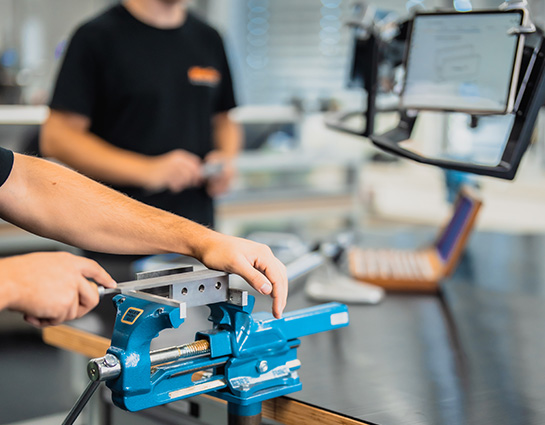
In the future, the apprentices will complete their practice assignments using instructions from their tablets.
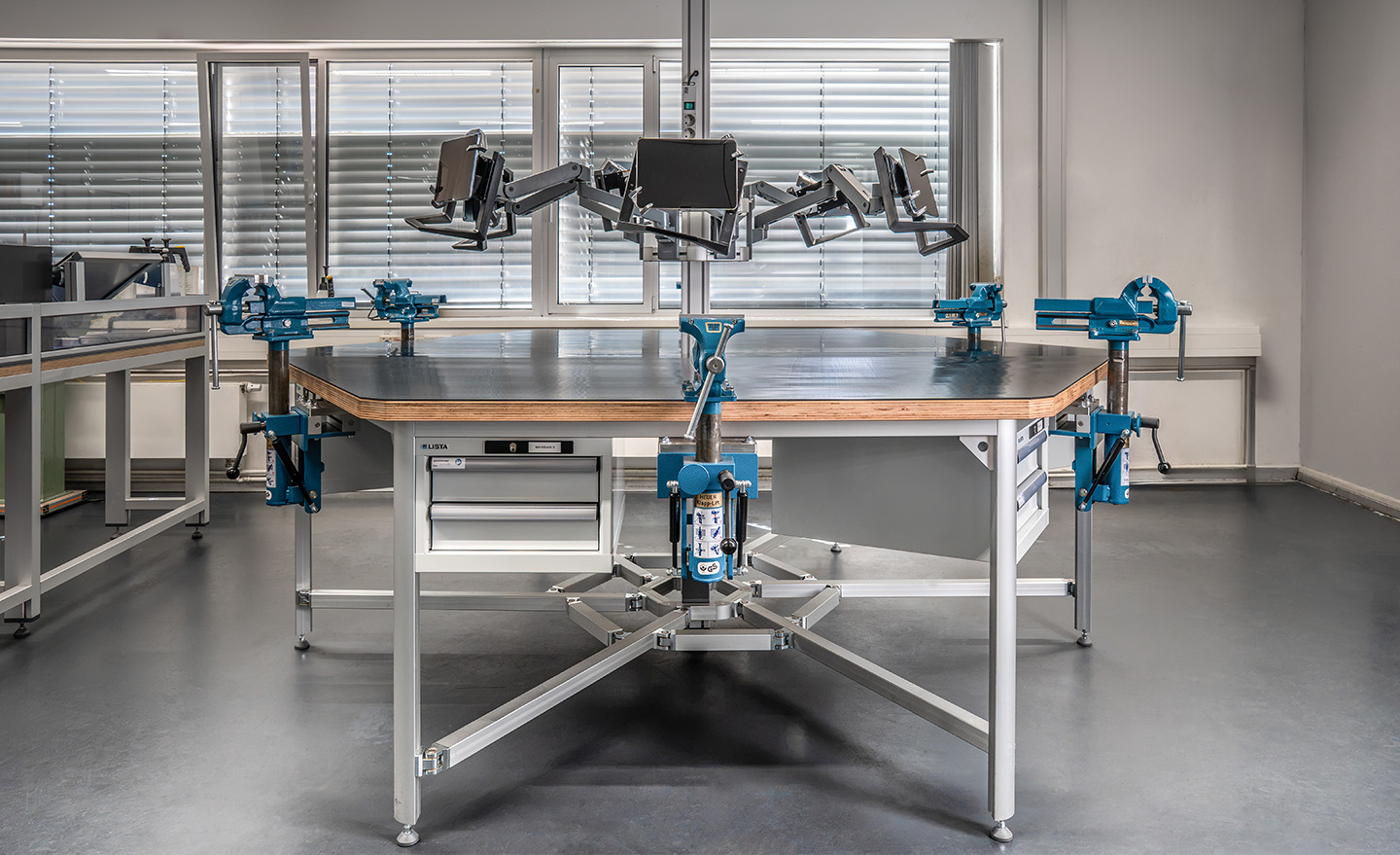
The new workbench can accommodate six trainees.
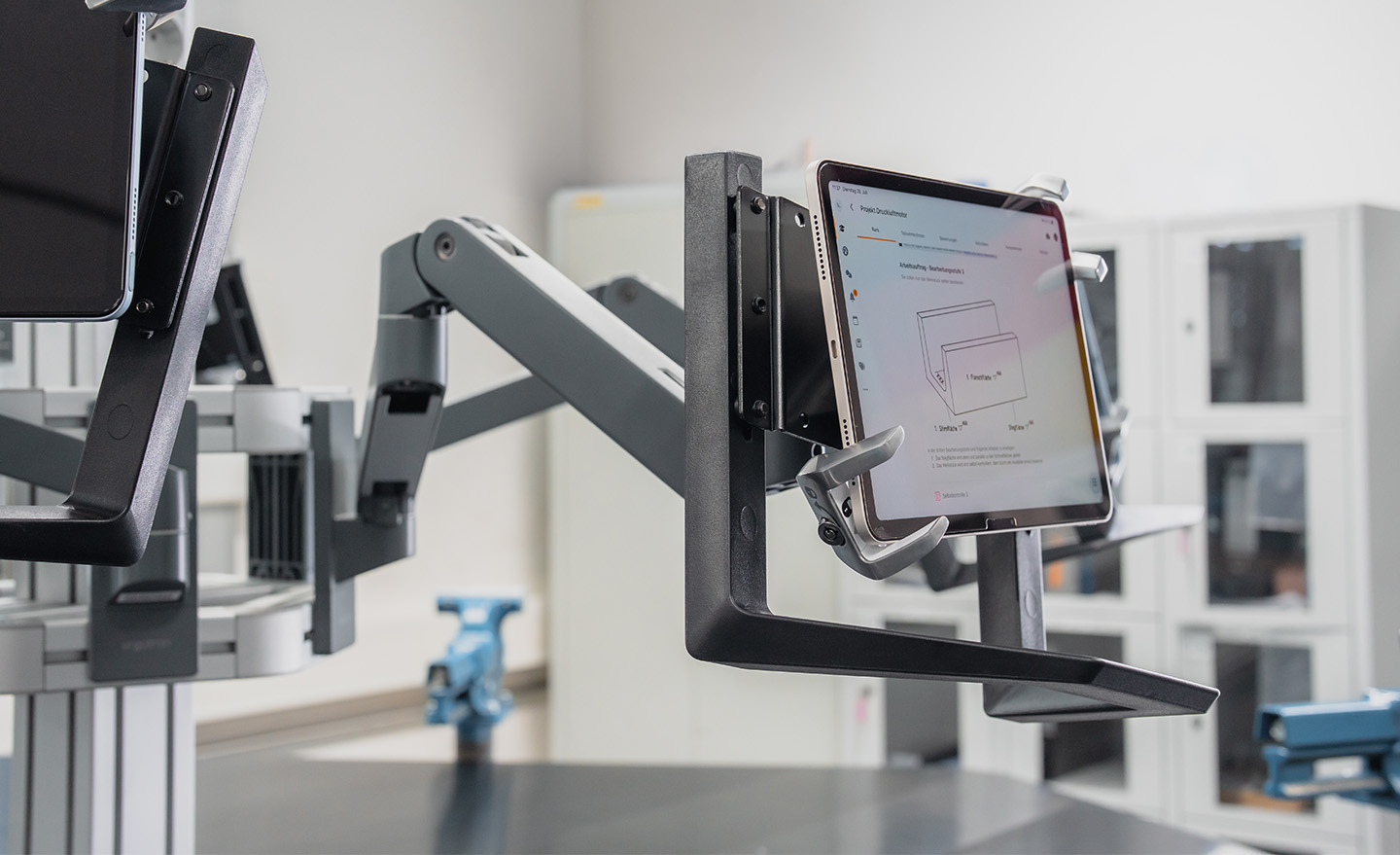
The swivel mount allows you to adjust the tablet's position to suit your needs.
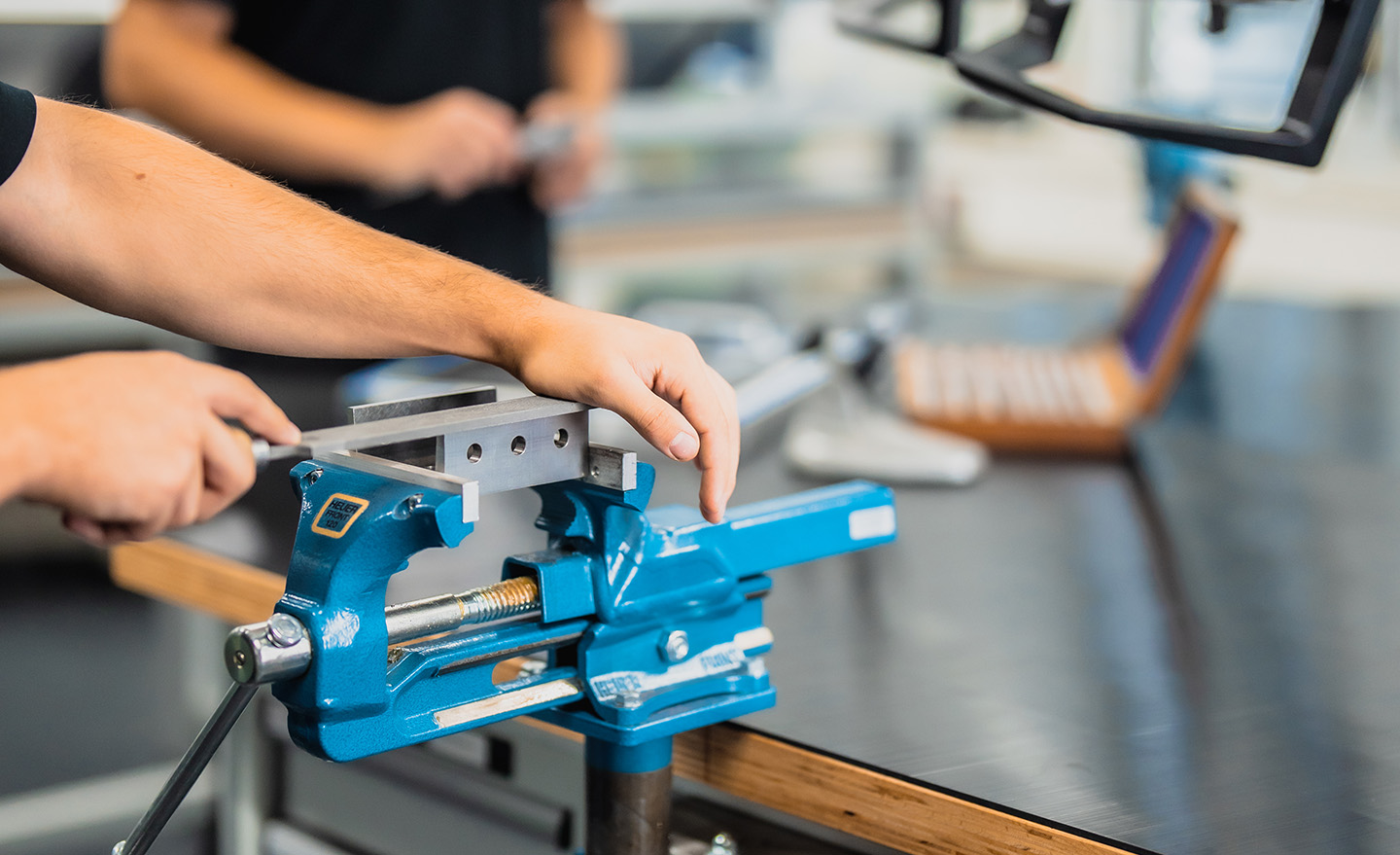
Working from digital instructions.
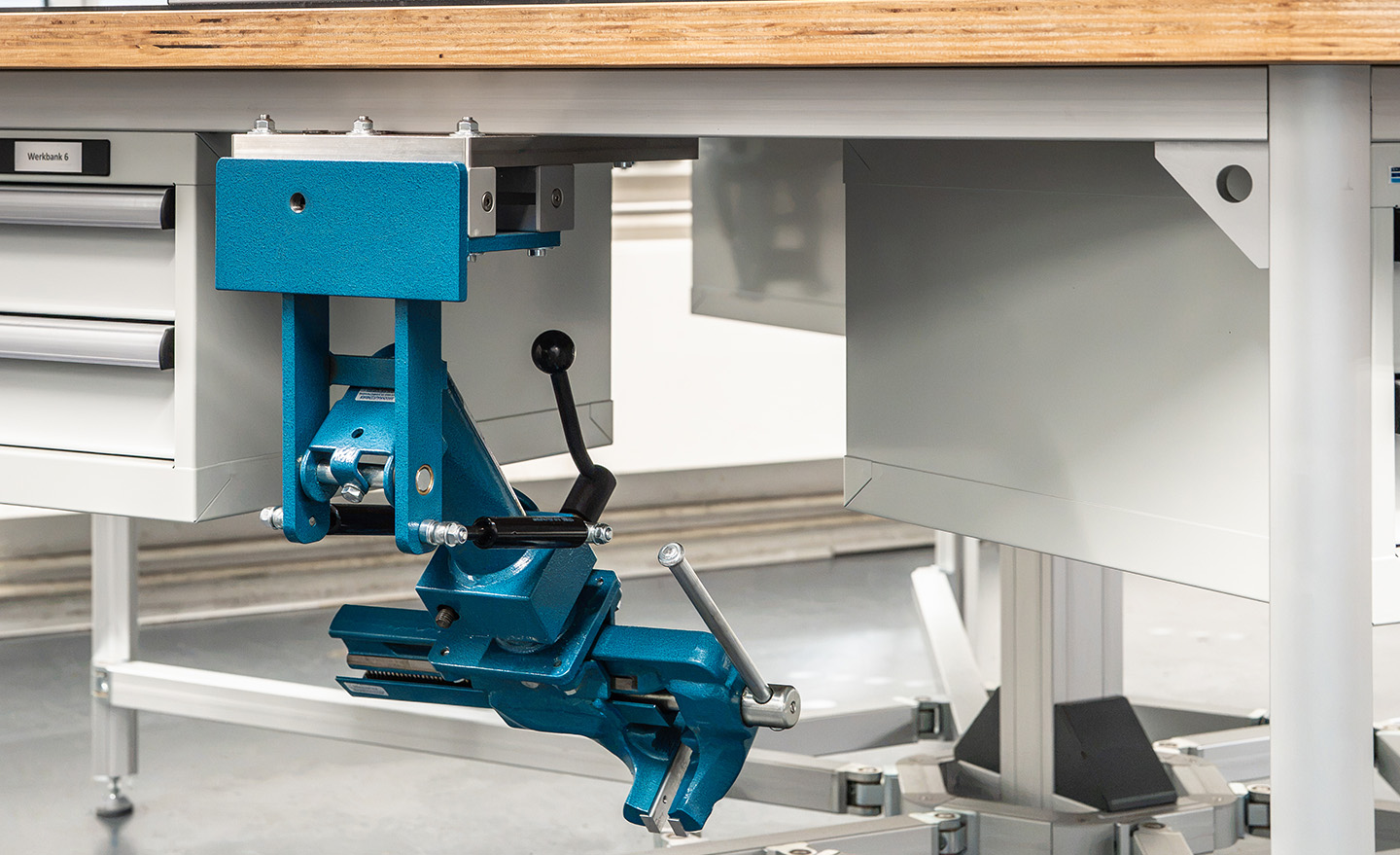
The height-adjustable vises can be adjusted to accommodate different body heights.
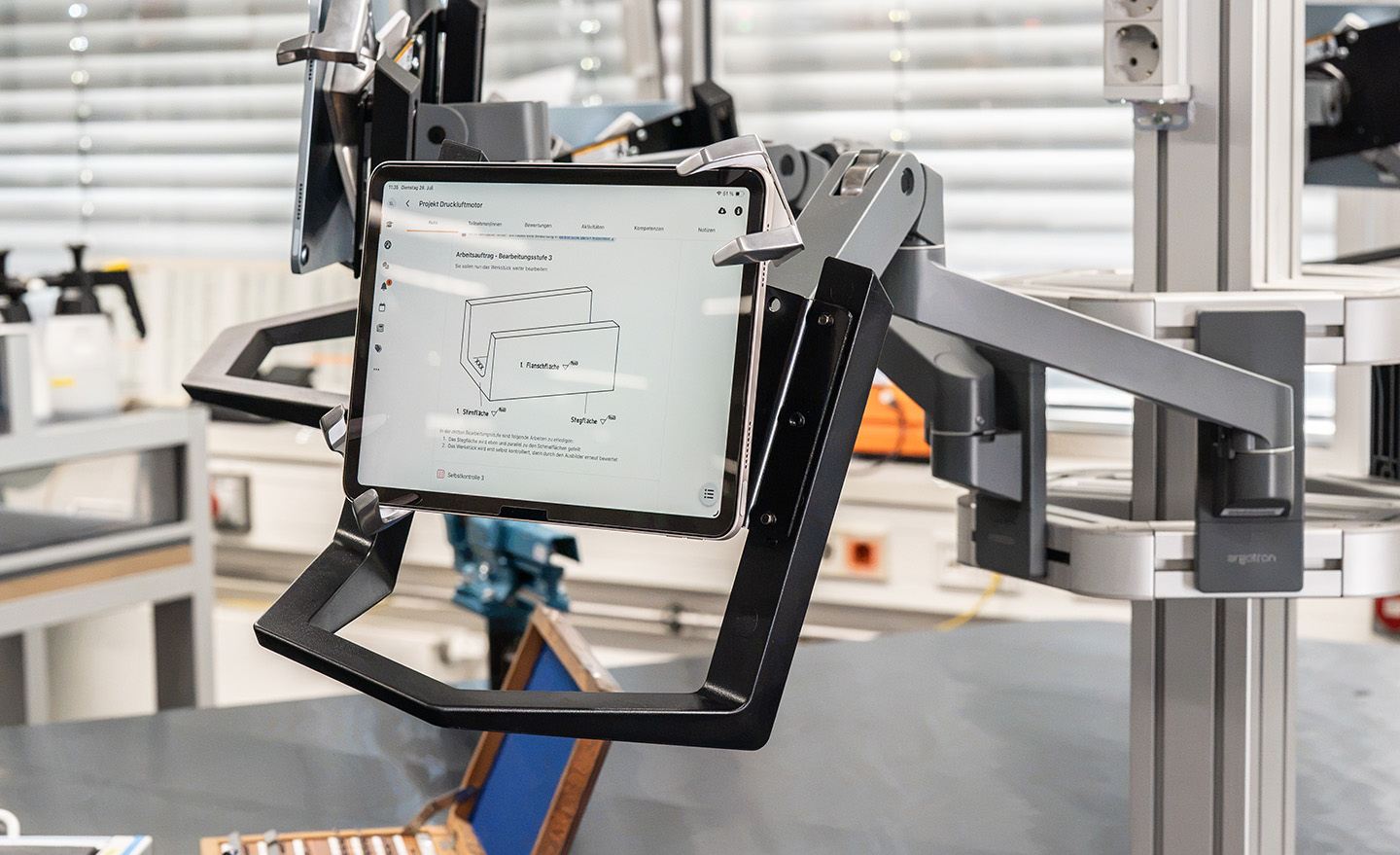
The content of the digital learning platform is designed by MiniTec in accordance with its own processes and specific requirements.
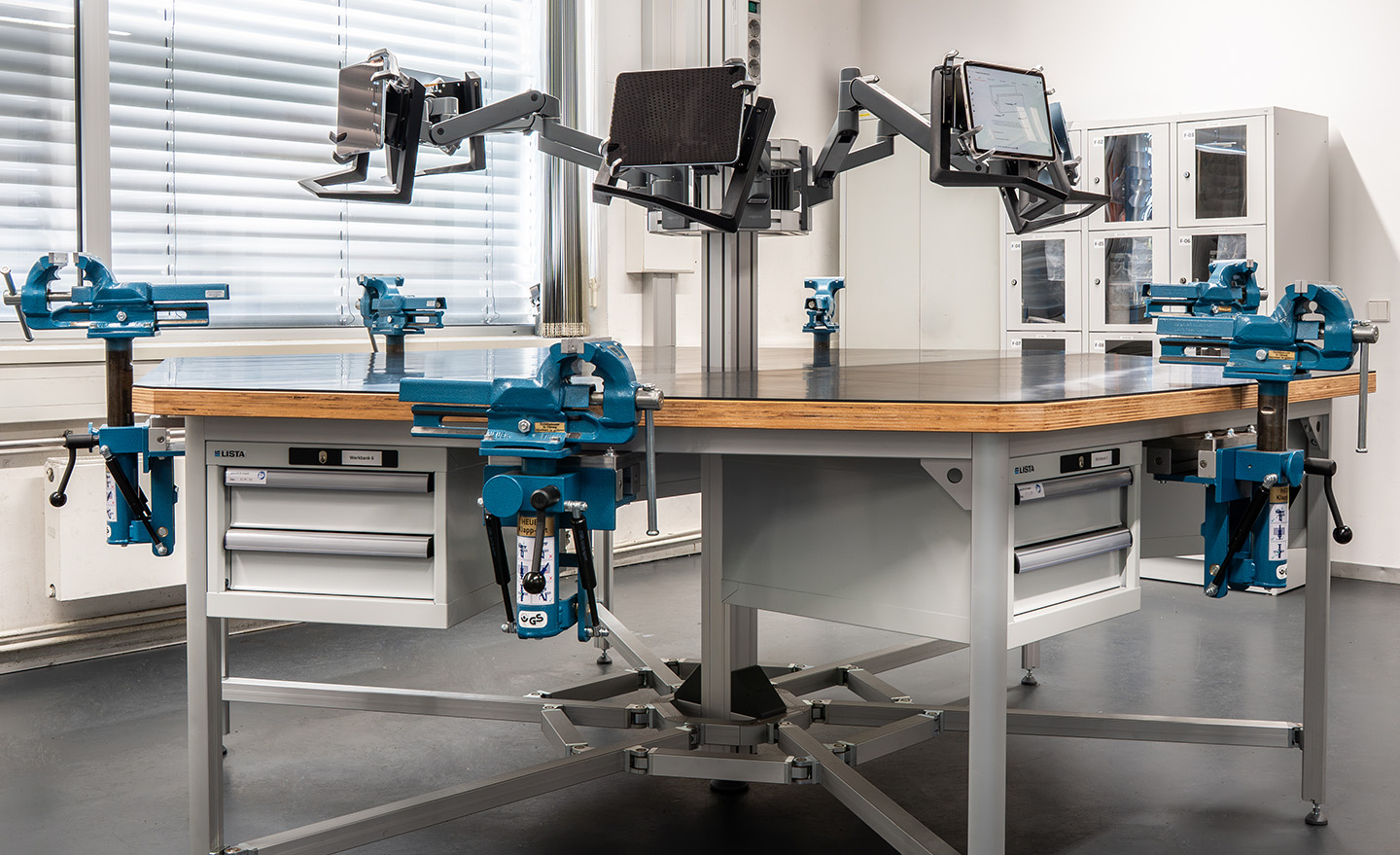
The workbench features a durable PU worktop. It is cut-resistant and resistant to hammer blows, oils, and other chemicals.
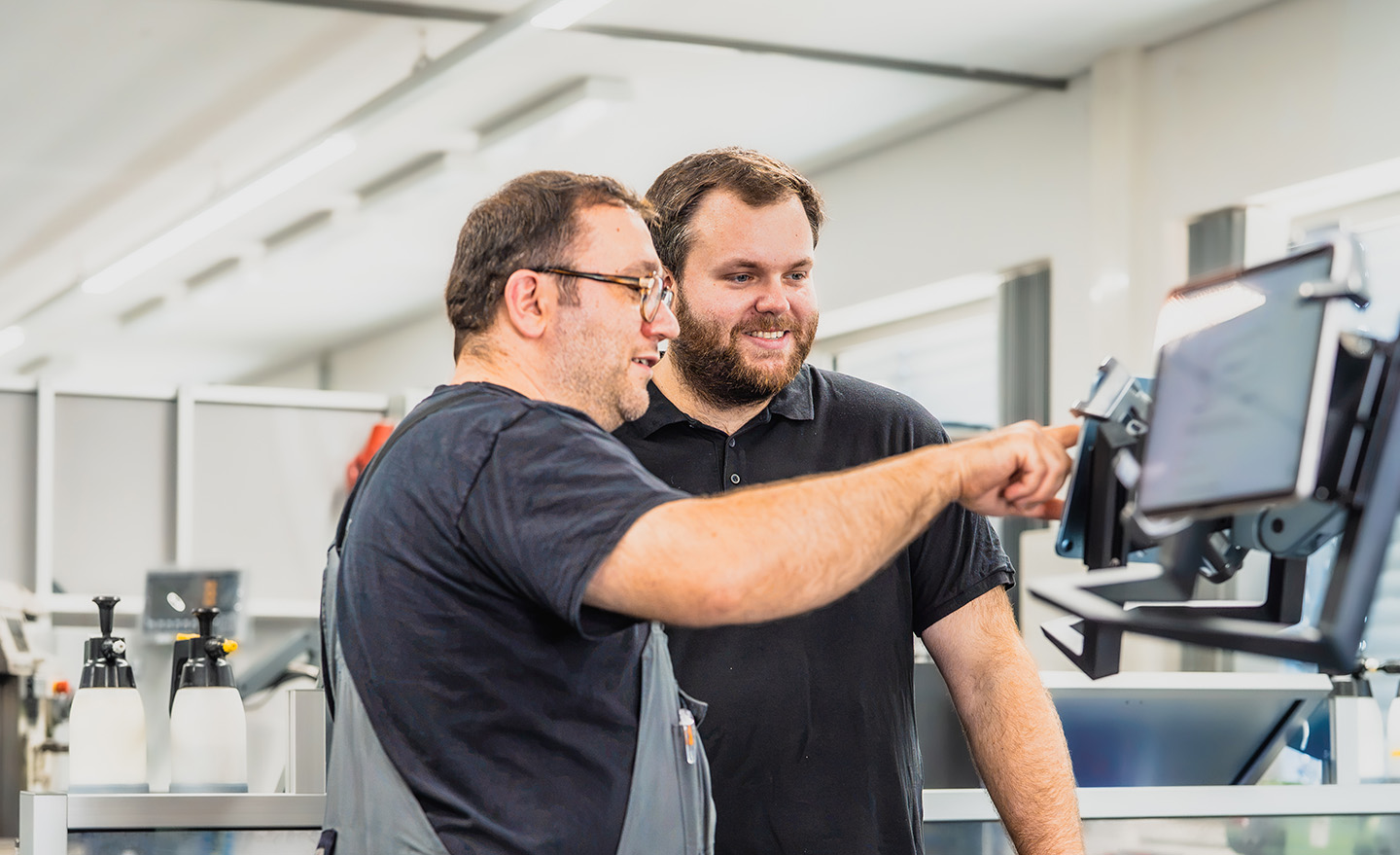
Simon Lorenz and Patrick Gorges are convinced of the success of their innovative training program.
Do you have any questions or would you like to learn more about MiniTec's job openings? Then feel free to contact us!